Bedding · Procurement guide
Naturepedic vs. Sleep and Beyond: What to Compare in Organic Sheet Sets
A sheet can look immaculate on a freshly made bed and still prove inconvenient by the third laundry cycle. For hospitality and facilities teams, choosing between organic linen and organic cotton sateen means weighing the feel guests notice against the fit, care routine, and service life staff have to manage.
Published October 21, 2026
In a guest room, sheets do their work quietly. They meet the skin before the room’s furnishings have had a chance to make an impression; they are folded, fitted, slept in, stripped, washed, dried, and returned, sometimes within a day. Their performance is intimate, but the decisions behind them are operational. A fabric that feels inviting at bedtime must also fit the mattress, tolerate the laundry routine, and make sense in the inventory system.
That is why a comparison between Naturepedic organic linen sheets and Sleep and Beyond organic cotton sateen sheets should begin with a distinction more consequential than brand: one is made from flax linen, the other from cotton woven in a sateen structure. Both are organic options, and both can serve a thoughtfully equipped room. But they are not interchangeable by nature, texture, or routine.
The useful question is not which sheet set wins in the abstract. It is which one suits the room, the people who sleep in it, and the people who have to care for it. A small property with a measured laundry process may value a different set of qualities than a busy facility that depends on dependable sizing and predictable turnover. The comparison becomes clearer when it is divided into four parts: fiber, feel, fit, and care.
Start with the fiber, not the adjectives
Naturepedic’s organic linen sheets are made from flax linen. The listed specifications describe a 185-gram-per-square-meter fabric using GOTS-certified organic flax grown in France, with production in a GOTS-certified facility in India. The set includes a flat sheet, a fitted sheet, and two pillowcases. The manufacturer describes the fabric as breathable, durable, and stone-washed, with a hand that softens through use.
Sleep and Beyond’s organic cotton sateen set takes a different route. It is made from GOTS-certified organic cotton woven in a 300-thread-count sateen construction. The product information describes a smooth, silky feel, reinforced elastic, and double-stitched corners. The set’s contents depend on its size; a Split King, for example, includes a flat sheet, two Twin XL fitted sheets, and two pillowcases.
These specifications describe unlike things. “Linen” identifies a fiber and the textile made from it; “sateen” describes a weave structure, commonly used with cotton to create a smoother surface. Thread count, meanwhile, is not a universal scale of quality across different fibers and constructions. A 300-thread-count cotton sateen cannot be ranked directly against linen by placing the numbers side by side. It is more useful to ask what each fabric feels like and how each construction behaves in use.
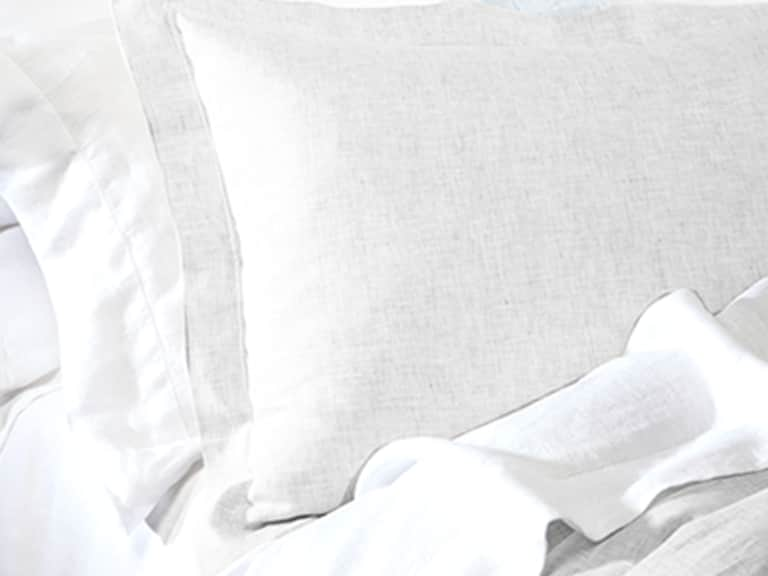
Linen’s characteristic texture is often more visibly irregular than sateen’s. Its surface has a relaxed, tactile quality, and the cloth may drape with a little more body. Cotton sateen tends toward a smoother face and a more familiar, polished hand. A guest who prefers a crisp, gently textured bed may respond to linen; one who wants a smooth surface may gravitate toward sateen. Individual preference remains decisive, and a fabric description cannot substitute for a proper sample where one is available.
“Organic” is also a point to verify, not a complete performance verdict. Certification can help substantiate claims about fiber sourcing and processing, but it does not tell a manager whether a particular pocket will accommodate a deep mattress or whether the laundry will be able to follow the care label. A procurement record should preserve the product’s certification information along with its construction and care details, rather than relying on a general sustainability claim.
How the fabrics may feel in a working room
For a guest, the distinction is immediate. Linen tends to announce itself: its texture is part of the experience, and the cloth’s relaxed appearance can make a bed feel less formal. Naturepedic describes its linen as weighty yet breathable, with a stone-washed finish. This can suit rooms where an easy, natural look is part of the design, and where the bedding is expected to feel substantial without being plush.
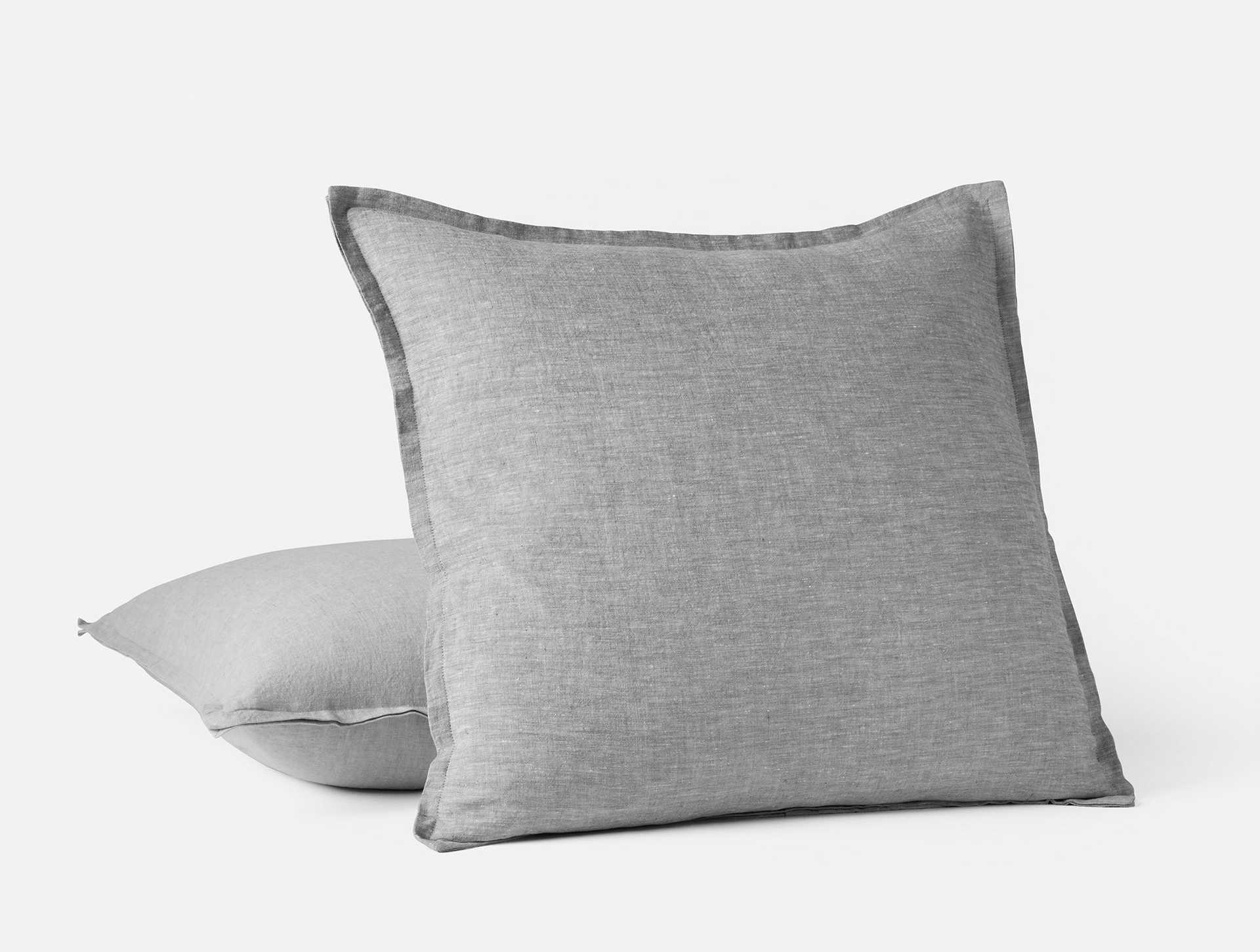
Cotton sateen offers a quieter surface. Its smoothness can read as classic and familiar, particularly in a room whose standards favor a neat, tailored presentation. Sleep and Beyond’s set is described as soft and silky, with a cotton construction intended for everyday use. That description may align with guest expectations in properties where the bed is meant to feel immediately recognizable rather than distinctive.
Neither “cooling” nor “breathable” should be treated as a guarantee of a particular sleep experience. Room temperature, mattress protectors, duvet weight, humidity, and the sleeper’s own preferences all contribute. A linen sheet does not compensate for an overheated room, and a smooth cotton surface does not necessarily feel warm to every guest. For a multi-room property, a short operational trial is more informative than relying on broad claims: put a sample through the normal bed-making and laundry cycle, then assess guest feedback and staff observations together.
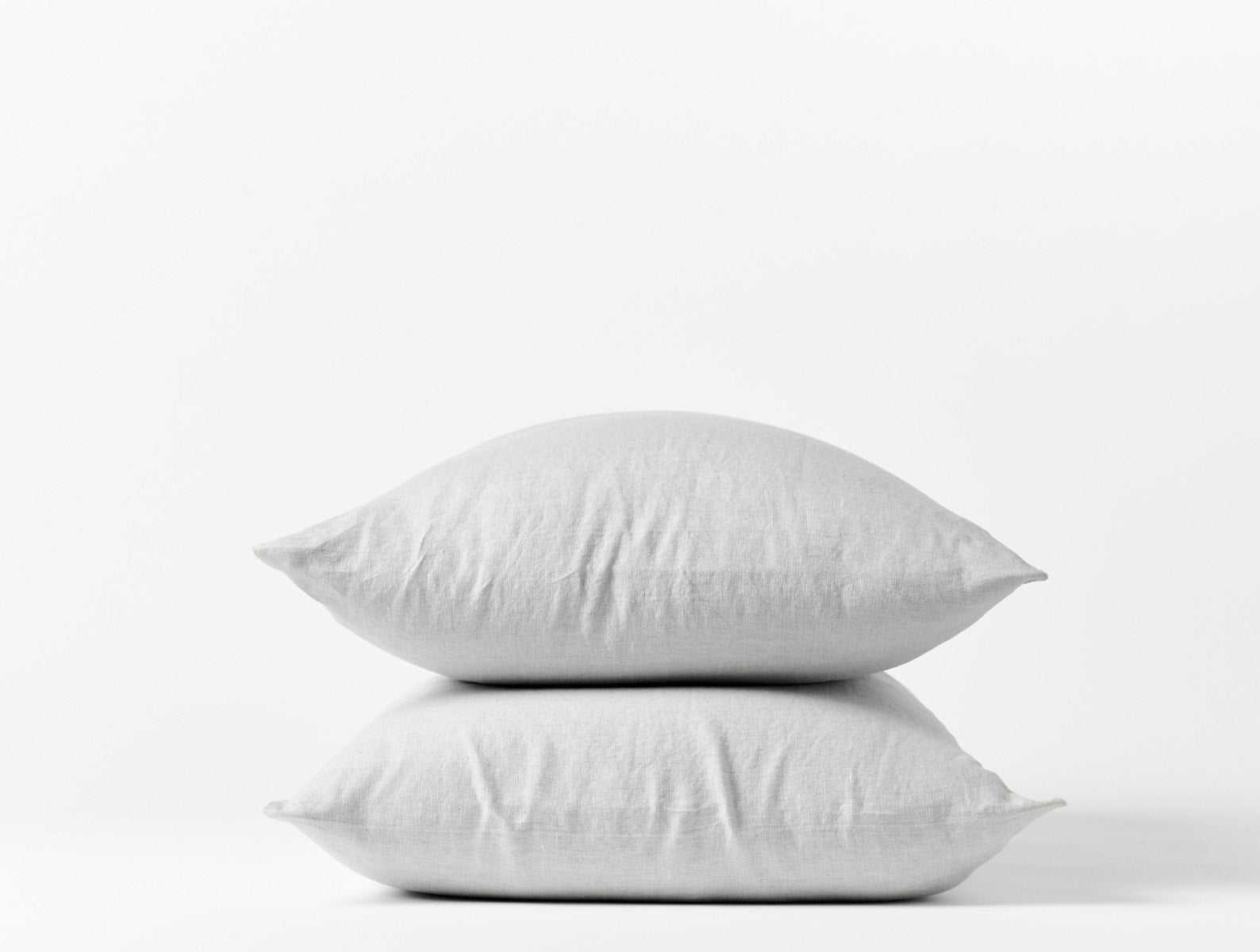
Appearance also changes with use. Linen’s natural creasing is part of its familiar character; it may not present the pressed, even finish some rooms require. Sateen can offer a smoother look, though its actual appearance still depends on washing, drying, pressing, and storage. Before a full purchase, managers should decide what “ready” means for their beds: crisp and formal, relaxed and textured, or something between the two. Housekeeping standards should reflect that decision rather than leaving each room to interpretation.
Fit is a specification, not a feeling
A fitted sheet that slips off at a corner can undo the impression created by the rest of a room. Mattress dimensions, depth, toppers, and protectors all affect fit. Measure the complete sleeping surface—not only the mattress label—before ordering. Include any permanent topper or protective layer, and check whether the fitted sheet’s stated pocket depth leaves adequate room to tuck beneath the mattress.
Naturepedic lists a 15-inch pocket on its fitted sheet. Sleep and Beyond describes deep pockets designed to fit mattresses up to 18 inches, with reinforced elastic. On paper, those figures suggest different ranges, but a pocket-depth number is only useful when compared with the actual bed setup. A 15-inch pocket may be ample for one room and marginal for another; an 18-inch pocket does not resolve a mismatch in mattress width, length, or corner construction.
Measure several beds in each room type. Mattress specifications can vary across a property, and replacement mattresses may be thicker than the originals. Where a facility uses mattress encasements or toppers, record their effect on total depth. During a pilot, test the fitted sheets after a full night’s use and after laundering. A sheet that fits when freshly made but works loose overnight is not a satisfactory fit.
Set contents deserve the same attention. Naturepedic’s listed Queen, King, and California King sets include a flat sheet, fitted sheet, and two pillowcases; the stated fitted-sheet pocket is 15 inches. Sleep and Beyond’s configurations vary with bed size, including a Split King option with two Twin XL fitted sheets. A split adjustable bed is a different inventory requirement from a conventional King. Confirm the precise contents for the size being ordered, and avoid assuming that “sheet set” always means the same combination.
For facilities with multiple bed types, record each configuration in a simple matrix: room or bed type, mattress dimensions, measured depth, number of pillows, set components, and any special requirements. This modest document prevents a familiar procurement error: ordering by a broad size label and discovering that the fitted sheet, pillowcase, or flat-sheet proportions do not match the actual setup.
Care instructions meet the laundry room
The best sheet for a facility is one the facility can care for as intended. Naturepedic’s listed care instructions call for machine washing warm, tumble drying on low, warm ironing if desired, and no bleach. Sleep and Beyond’s product description identifies the set as machine washable, but managers should consult the current care label for the exact washing and drying instructions before setting a standard operating procedure.
That distinction matters because laundry routines are systems. Water temperature, detergent, load size, drying time, finishing equipment, and staff habits all affect results. A product may tolerate ordinary home laundering while requiring adjustments in a high-volume setting. Before a purchase, ask whether the recommended care can be followed consistently with the equipment and schedule already in place. If not, work out the cost and staffing implications before the sheets are assigned to rooms.
Do not overfill washers or dryers simply because the fabric seems robust. Overcrowding can interfere with cleaning and rinsing, while excessive heat and over-drying may put unnecessary stress on fibers and elastic. Use the label as the authority, and test the complete process on a small batch. Track shrinkage, seam condition, color change, softness, drying time, and any loss of fitted-sheet grip. These observations are more valuable than an untested assumption that one fiber is automatically easier to maintain than another.
Separating linen and sateen by product code or clearly marked laundry groups can help staff apply the correct instructions. If different materials share equipment, the process should still make their care requirements visible. Keep a written reference near the laundry area, especially where seasonal staff or multiple shifts may handle the same stock. Consistency is not glamorous, but it is one of the things that makes a linen program feel dependable.
Evaluate cost per use, not just purchase price
For a commercial buyer, a sheet’s initial cost is only one part of the decision. A more useful comparison considers how many usable service cycles it delivers, how much labor it requires, how reliably it fits, and how easily it can be replaced. A lower unit price may not be economical if the set wears out quickly or causes repeated bed-making problems. A higher price may be justified if the item lasts longer in the facility’s actual conditions—but that should be demonstrated, not presumed.
During a trial, assign a small, identifiable group of sets to a representative number of beds. Record the date each set enters service, the number of wash cycles if practical, repairs, stains that cannot be removed, elastic failures, and the reason for retirement. Compare like with like: room type, laundry process, occupancy, and staff handling should be reasonably consistent. A short trial cannot establish a definitive lifespan, but it can reveal inconvenient fit or care issues before a larger order.
Replacement planning should include more than the number of beds. Estimate how many sets are needed in circulation to cover use, washing, drying, storage, and unexpected damage. The exact par level depends on occupancy, laundry turnaround, and the property’s operating model. A material that takes longer to dry, or a sheet that requires more careful finishing, may affect the inventory buffer even if it performs well in other respects.
For a concise comparison, use a scorecard with four categories:
- Fiber and surface: flax linen’s relaxed texture versus cotton sateen’s smoother hand.
- Fit and contents: pocket depth, mattress dimensions, elastic construction, pillowcase sizes, and included pieces.
- Care: label requirements, compatibility with the laundry process, drying and finishing time, and staff training.
- Lifecycle: purchase cost, observed wear, repair or replacement rate, inventory needs, and guest response.
Weight those categories according to the rooms’ purpose. A small inn focused on a tactile, natural aesthetic may give texture and presentation greater importance. A healthcare, education, or high-turnover accommodation setting may put more weight on reliable fit, standardized handling, and quick replacement. The point is not to force every operation into the same ranking. It is to make the criteria explicit enough that the eventual choice can be explained, repeated, and reviewed.
A practical comparison checklist
Before ordering either Naturepedic or Sleep and Beyond organic sheet sets, confirm the following with the product specification and a sample wherever possible:
- What is the exact fiber and construction? Distinguish linen fiber from cotton sateen weave rather than comparing labels as if they were equivalent.
- What certification is stated, and does the documentation apply to the product and production stage being evaluated?
- What are the fitted-sheet pocket depth and full dimensions? Check them against the mattress, protector, and topper together.
- What pieces are included for each size, and are pillowcase dimensions suitable for the pillows in service?
- Does the fitted sheet use full elastic or another construction detail that helps it remain secure?
- Can the laundry team follow the care instructions without disrupting normal turnaround?
- How does the fabric look and feel after washing and drying—not only straight out of its packaging?
- What is the cost of a complete operating supply, including enough sets for rotation and replacement?
The decision is local
Naturepedic and Sleep and Beyond represent two distinct approaches to organic bedding. Naturepedic’s linen option brings flax fiber, a textured hand, a listed 15-inch fitted-sheet pocket, and care instructions that include warm washing and low tumble drying. Sleep and Beyond’s option brings GOTS-certified organic cotton sateen, a smoother surface, deep pockets stated to accommodate mattresses up to 18 inches, reinforced elastic and corners, and size-dependent set configurations.
Neither list of features settles the matter on its own. The linen set may make sense where its texture, provenance, and relaxed presentation align with the room, and where the laundry routine can accommodate its instructions. The cotton sateen set may appeal where a smooth surface, reinforced corner construction, and deeper stated pocket are useful priorities. In both cases, the final judgment belongs to the bed in service: measured, made, slept in, laundered, and made again.
For a closer look at the listed specifications, see Naturepedic Organic Linen Sheets and the Sleep and Beyond Organic Cotton Sateen Sheet Set. Treat their product pages as starting points, then verify current sizing and care labels before procurement. In a well-run linen program, comfort is never merely a feeling. It is a feeling that can survive the wash.